
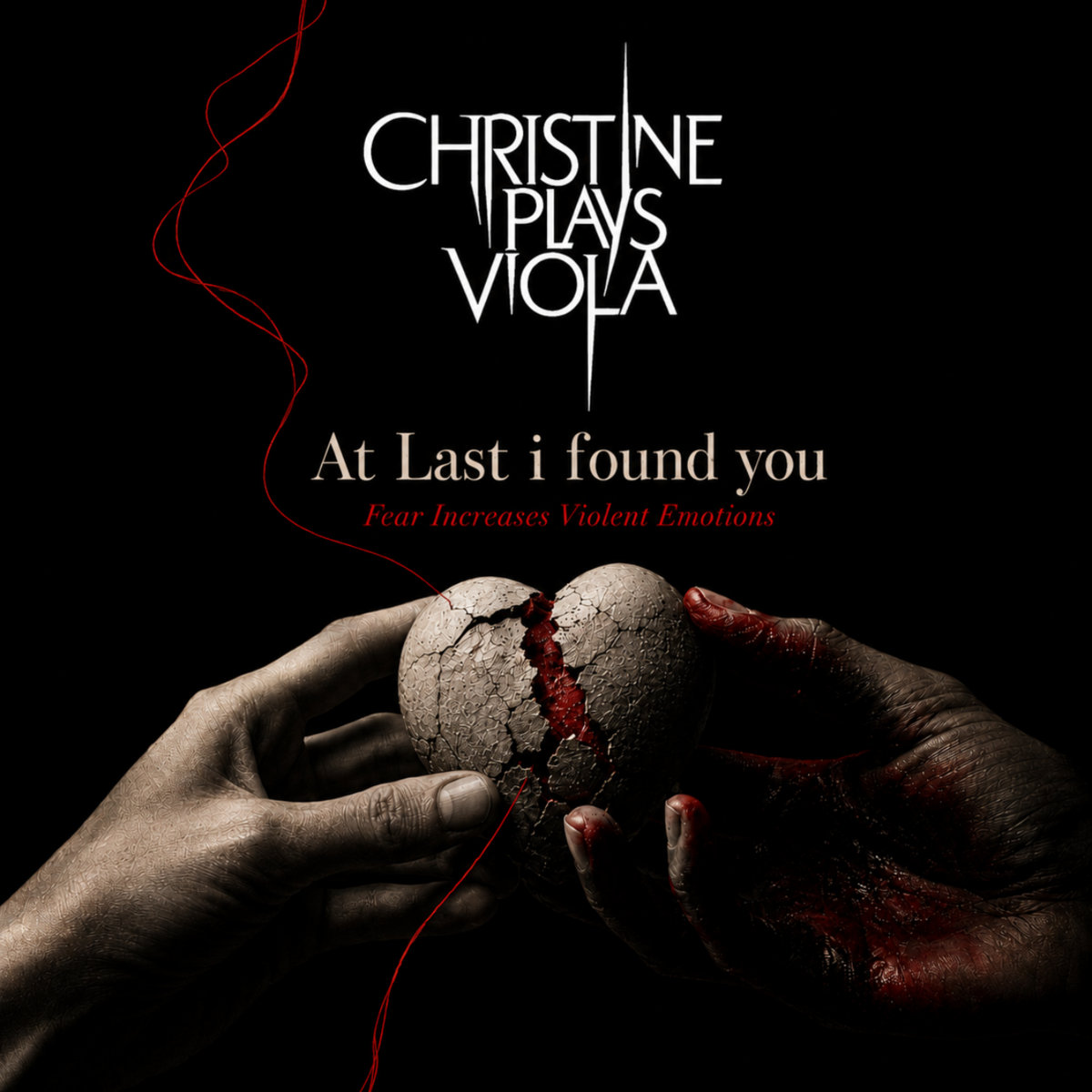
Christine Plays Viola
Italian darkwave with gothic grandeur, post-punk precision, and a cinematic chill.
Christine Plays Viola occupy that shadowed corner of European underground music where post-punk austerity meets gothic drama. Since emerging from Abruzzo in 2008, the Italian outfit have refined a sound that feels both steeped in the classic darkwave canon and alert to the sleek, modern possibilities of the genre. There are echoes of The Cure, Joy Division, Depeche Mode, and Siouxsie and the Banshees in their DNA, but the band’s appeal lies in how confidently they turn those influences into something sharply their own.
The sound is all atmosphere and architecture. Guitars arrive like blades of cold light, basslines stalk rather than stride, and the vocals sit at the centre with a theatrical gravity that gives the songs their pulse. Christine Plays Viola do not simply dress their music in black and call it gothic; they build tension with care, letting repetition, space, and texture create the unease. At their best, the songs unfold like miniature noir films: elegant, haunted, and deliberately paced.
On more recent material, particularly around F.I.V.E. – Fear Increases Violent Emotions, the band’s palette grows richer and more forceful. The production has a glossier sweep, the synths press forward with greater confidence, and the songwriting leans into big emotional weather: fear, identity, collapse, survival – It’s music that understands darkness not as decoration, but as pressure — something that shapes the rhythm, the voice, and the very temperature of the record.
That intensity will not be for everyone. Listeners looking for quick choruses, bright release, or casual background listening may find Christine Plays Viola too severe, too deliberate, too committed to the long shadow. But that seriousness is also their strength. They write with conviction, avoiding the cheap theatrics that can flatten some gothic rock into mere costume drama. Instead, they offer mood with muscle, melancholy with momentum. Their latest single released on 22 July 2026 is a standalone companion to F.I.V.E
“At Last, I Found You” finds the band turning psychological fracture into something sharply immediate and club-ready. Rather than feeling like an orphaned album outtake, the track works as an epilogue: a final flare of motion, memory and self-recognition after the album’s heavier emotional terrain.
The song’s strength lies in its balance of accessibility and unease. The rhythm section pushes forward with a steady, nocturnal drive, while guitar and synthesizer textures darken the edges with a cold, post-punk shimmer. It is melodic enough to catch quickly, but the atmosphere never loosens its grip; each hook feels haunted by the emotional pressure beneath it.
Lyrically, the single frames flight and self-destruction as a search for a lost inner self, with the title’s “you” gradually shifting from an external figure to a buried childhood identity. That revelation gives the track its emotional payoff: beneath the gothic imagery of darkness, blood, chains and the void, the song is really about trying to recover innocence from fear’s wreckage.
Vocally, Massimo Ciampani delivers the piece with a controlled urgency that suits the arrangement’s forward momentum. The refrain lands with enough force to make the track feel like a darkwave anthem, yet the performance avoids melodrama; its tension comes from restraint as much as release.
As a single, “it’s one of their most direct and effective recent statements. It has the pulse and immediacy of a floor-filler, but its emotional centre remains bruised, introspective and unresolved. That contrast is exactly what makes it compelling: it moves like escape, but sounds like confrontation. “At Last, I Found You” is a sleek, urgent and psychologically charged darkwave single that closes the F.I.V.E. universe with both momentum and meaning.
Not exactly easy listening — but then, the shadows rarely are.