
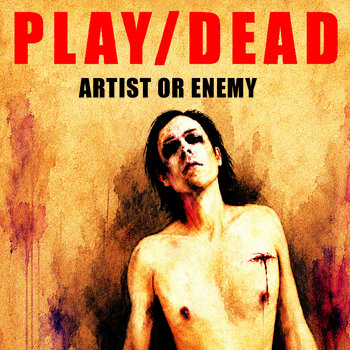
PLAY/DEAD UK’s Artist or Enemy lives in the uneasy space between the hand that creates and the hand that tears apart. Across nine tracks, creativity and confrontation give the record its dark, questioning character. When does the observer become a participant, and when does the artist become an enemy? The title leaves those identities unsettled, suggesting that the roles are less separate than we might wish.
An infectious rhythmic pulse runs beneath Artist or Enemy, threading its heavier alternative and industrial rock foundations with a sultry, almost seductive energy. It brings to mind aspects of Marilyn Manson’s 1990s sound: the industrial edge, the gothic theatre, the provocative stare. Yet that resemblance is a doorway, not the destination. There’s nostalgia here yes, but it’s merely borrowed scenery amongst a much wider sonic landscape. The landscape that PLAY/DEAD UK inhabit is very mush one of their own. What holds me here is the groove, drawing movement from an atmosphere that might otherwise close around the listener.
Bass and lead guitars give the album its sinew, as vital to its character as the vocals. Against the pulse of the synth drums, they do more than lend weight: they propel the songs and sharpen their darker, more sensual edge. The interplay of low-end presence, heavier rock elements and electronic textures gives the music a momentum you feel as much as hear. The atmosphere may brood, but it never stands still; even in the shadows, something keeps dancing.
Stuart Rochester’s lyricism is poetic yet stark, often reflecting a sense of urgency and internal struggle. There is a tension between the reach of the imagery and the exposed feeling beneath it, as though metaphor offers expression without quite providing shelter. For me, that contrast gives the words their bite: they invite reflection, but rarely allow the listener to settle into a comfortable distance. Set against the insistent rhythms and treated vocals, this inward unease becomes part of the album’s momentum, giving its darker theatricality a vulnerable centre.
Present Postmortem establishes the record’s darker sensibility, placing the listener somewhere removed from comfort and convention. The longer tracks then give its moods and textures room to develop. Industrial weight, rhythmic drive and gothic atmosphere keep the arrangements cohesive, while allowing each song a character of its own.
The titles Sexy Sins and Neon Narcissist catch the light differently within that darkness. The first wears the album’s seductive character openly; the second calls up artificial glamour, self-obsession and the glare of modern identity. These are images the names awaken, not a complete account of either song’s meaning. Against the music’s danceable pulse, they suggest the uneasy pleasure of reaching towards something even as we question its grip.
The title Meet Me in the Ashes conjures a more desolate landscape: the fire has passed, and what remains must somehow become a meeting place. There is a powerful sense of aftermath in those words, of loss made visible in the remnants. Read through that image, the album’s darker aesthetic becomes a place where vulnerability and confrontation stand close enough to touch.
Hole in the Middle and Architect suggest opposing shapes: an absence and a structure, something missing and something deliberately made. The former evokes emotional disconnection, the recognition of an emptiness where something essential ought to be. The latter raises questions of construction and control: whose hands build the world we inhabit, and who bears its weight? Read through these titles, the record traces a path between inward unease and outward confrontation, with provocation and darker theatricality along the way.
Then there is Sanctus, a title carrying the hush and gravity of ceremony. Its religious associations bring reverence, judgement and redemption into view, setting a different light against the provocation suggested elsewhere. The name alone cannot tell us the song’s meaning, but it opens another chamber in the imagination: a place where the sacred and the seductive seem uncomfortably close.
At the title track, Artist or Enemy, the record’s central question returns with a double uncertainty. For me, the phrase asks whether the artist reflects the world’s contradictions or actively participates in them, and whether creativity resists manipulation or becomes another of its instruments. The title invites both readings without resolving either, making that uncertainty central to the album’s wider identity.
Mr Rochester Is Dead is an evocative name on which to close. Its literary associations bring troubled relationships and the uncomfortable legacy of romanticised power to mind, like a familiar story with its reassuring surface stripped away. That is the reading the title invites for me; it deepens the theatrical unease of an ending that offers no easy refuge.
What stays with me is the balance Artist or Enemy holds between its opposing forces. Darkness gathers without blotting out the air; seduction keeps its teeth; heaviness never pins the rhythm to the floor. Industrial and gothic influences meet an alternative rock attitude and a distinctly danceable pulse, giving the album a character of its own. Artist or Enemy makes its questions felt in the body as much as the mind. Identity, perception and darker impulses take shape within an atmosphere that unsettles even as it draws us closer. The tension between creation and destruction offers no comfortable answers, only a rhythm that carries us further into the half-light. There, the boundary between artist and enemy remains blurred: the body follows the beat even as the mind hesitates.
“Artist Or Enemy” is available on most streaming platforms & to buy here: Artist or Enemy | PLAY/DEAD
Lebs Fiasco Nov 2026