
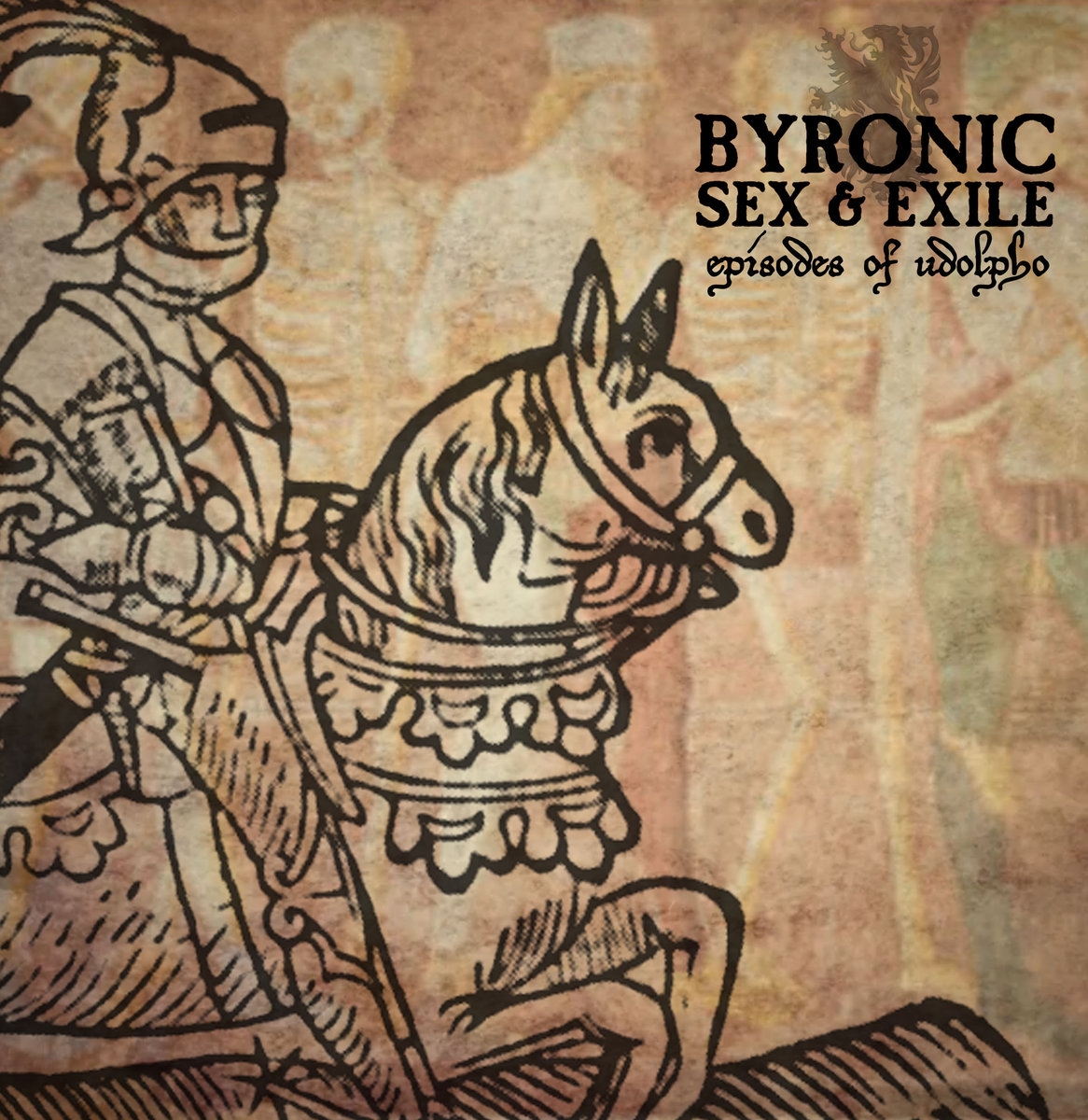
Gothic romance, medieval shadows and the enduring ghosts of power
There’s a pleasing sense of returning to the source on Episodes Of Udolpho. After the protest and acoustic songs of Dauntless Zeal, Byronic Sex & Exile head deeper into Gothic romance, taking their cue from Ann Radcliffe’s 1794 novel The Mysteries of Udolpho. This latest part of the ongoing Last Of The Goths project explores the Gothic’s political and cultural roots. Romance sits alongside horror, beauty rubs against corruption, and history is never quite separate from the imagination.

Across these six tracks, despots, mercenaries, ghosts and imprisoned hearts share the same uneasy world. There’s plenty of period atmosphere, but Byronic Sex & Exile aren’t just recreating the past for its own sake. The ambition, oppression, deception and rebellion beneath the costumes feel familiar enough. That’s what gives the EP its bite: the setting may be distant, but the struggles aren’t.
Opener ‘Montoni’s Eyes’ wastes little time establishing the stakes. Radcliffe’s sinister Montoni stands at its centre, his ambition matched by an appetite for control. Locked rooms, conspiracies and banditti build a picture of power at its ugliest. “Chambers of evil and pride” is an especially vivid phrase, though it’s the repeated attention to Montoni’s eyes that gets under the skin. The horror seems to lie as much in his cold intent as in the things he does.
Then “Rights, ancient rights / Won, nor denied” cuts through with a note of defiance. As the closing lines turn to despots, bloodshed and children living with the consequences, the song reaches beyond Radcliffe’s story. Its argument about freedom and tyranny is hard to miss. The grand, dramatic approach suits it: this is an opening statement with something at stake, not just an invitation to admire the shadows.

‘Sonnet’ offers a gentler way in, with lyrics by Radcliffe herself. There’s something appealing about hearing her own poetic voice within a project so indebted to her work. Fairy-lit woodland, tender sorrow, an illuminated soul and a lover’s beauty all belong to an older romantic ideal. But the sweetness doesn’t last untroubled. Beneath the flower’s silken leaves may be a drug that steals life itself. That angelic smile begins to look less reassuring; what seems beautiful may be poisonous.
That shift from admiration to suspicion is where the song becomes most interesting. Enchantment gives way to unease, and desire brings the risk of being deceived. It also sets up a useful link with ‘Melancholy Apollo’, which finds a different kind of trouble beneath a beautiful surface.
‘Condottieri’ takes us back into the scramble for power. Named for the Italian military leaders who sold their services to rival rulers, it describes a world where loyalty can be bought, honour is easily faked and violence gets things done. “No God here, only Doge” makes the point sharply. Political power seems to have pushed everything else aside; the ruler is the only authority left worth answering to.
The details make that world feel grubby beneath its grandeur. Pride becomes a mask, gold makes brutality look glamorous, and the masquerade mixes honour with thieves and crime. Even royalty gets a reminder of its limits: “An equal right to die.” Montoni’s reappearance links the song back to the opener, as if to suggest that this hunger for power keeps finding new faces. The repeated “Glory, fire and war” gives it a confrontational edge. Ambition has become both a spectacle and something close to a religion.
Where ‘Sonnet’ finds danger beneath beauty, ‘Melancholy Apollo’ finds loneliness. Apollo, the classical image of beauty, light and artistic perfection, appears cold and out of reach. “Marble skin” does much of the work: the flawless statue becomes an image of someone unable to feel warmth or let it in. A heart of stone, black skies and recurring images of confinement deepen the sadness. Perfection doesn’t look especially enviable here.
“Beauty, a prison too” puts that feeling into a few plain words. The romantic ideal has become something to escape. Yet the ancient shadow soul and the blood waiting to spark hint that there’s still life beneath the polished surface. That tension gives the song its pull: the wish to feel is there, but so is the coldness holding it back. This is a more inward-looking darkness than Montoni’s tyranny, concerned with the things that can imprison us from within.
‘Knights & Ghosts’ opens the view out again. “Beneath modernity” suggests that the past hasn’t gone anywhere; its stories, institutions and beliefs still sit underneath the present. The images make the argument more sharply than any explanation could. “Fictions which bleed” and “Bibles with teeth” give inherited ideas a nasty physical presence, suggesting how easily belief can turn into an instrument of control or violence.
But the song leaves room for resistance. “Gods, no masters” rejects authority outright, while slogans, rebellions and whispered ecstasies connect political revolt with more private forms of freedom. Peasants, artisans and poets matter here as much as rulers and warriors. They’re the people living under power, pushing back against it or finding a way to make a life beyond its reach.
The refrain is the line that brings it all together: “The knights have gone away / The ghosts are here to stay.” The armour can be put away and the battles left to the history books, but the damage doesn’t disappear so neatly. Those ghosts might be old injustices, stubborn ideologies, memories or wounds. It’s a Gothic image with an uncomfortable familiarity. The people who made history leave; everyone else lives with what they’ve left behind.

After that, ‘Udolpho’ lets the words fall away. The closing instrumental is epic and elegiac, returning the focus to medieval atmosphere rather than adding another lyrical argument. It feels like the right way to leave this world. With no voice to guide the listener, the music has space to linger in the shadows the earlier songs have created.
The music matters as much as the literary references. The genuine Radcliffeian lute on ‘Melancholy Apollo’, ‘Condottieri’ and ‘Sonnet’ helps give the EP its historical texture, while ‘Montoni’s Eyes’ works on a larger, more dramatic scale. Then there’s the explosive baroque broadside of ‘Knights & Ghosts’, that carries the force of Joel’s trademark epics. These contrasts keep Episodes Of Udolpho from feeling like contemporary songs dressed up in period costume. The sound is part of the world being built.
What holds the record together is the way the songs answer one another. Montoni wants control; the lovers and beautiful figures of ‘Sonnet’ and ‘Melancholy Apollo’ find that appearances offer little protection; the mercenaries of ‘Condottieri’ turn ambition into a trade. By ‘Knights & Ghosts’, those individual struggles have become part of a much longer history. The connections give the six tracks a shared purpose without making them all tell the same story.
That’s also why the Radcliffe connection feels worthwhile. There are castles, shadows and romantic melancholy here, but the EP is just as interested in who holds power and what they do with it. Her world gives Byronic Sex & Exile a way to ask awkward questions about authority and the things polite civilisation prefers not to examine. The centuries between that world and ours don’t make those questions feel remote.Episodes Of Udolpho works because it takes its Gothic romance seriously without stopping at the velvet and shadows. Beauty can become a trap, honour can cover corruption, and the past has a habit of refusing to stay buried. Literary, theatrical and thoughtful, it’s an evocative addition to Last Of The Goths. The darkness isn’t only in the setting. It’s in the people, and that’s what stays with you
Listen & buy it here: Episodes Of Udolpho | Byronic Sex & Exile | Goth City Records
Lebs Fiasco Nov 2026